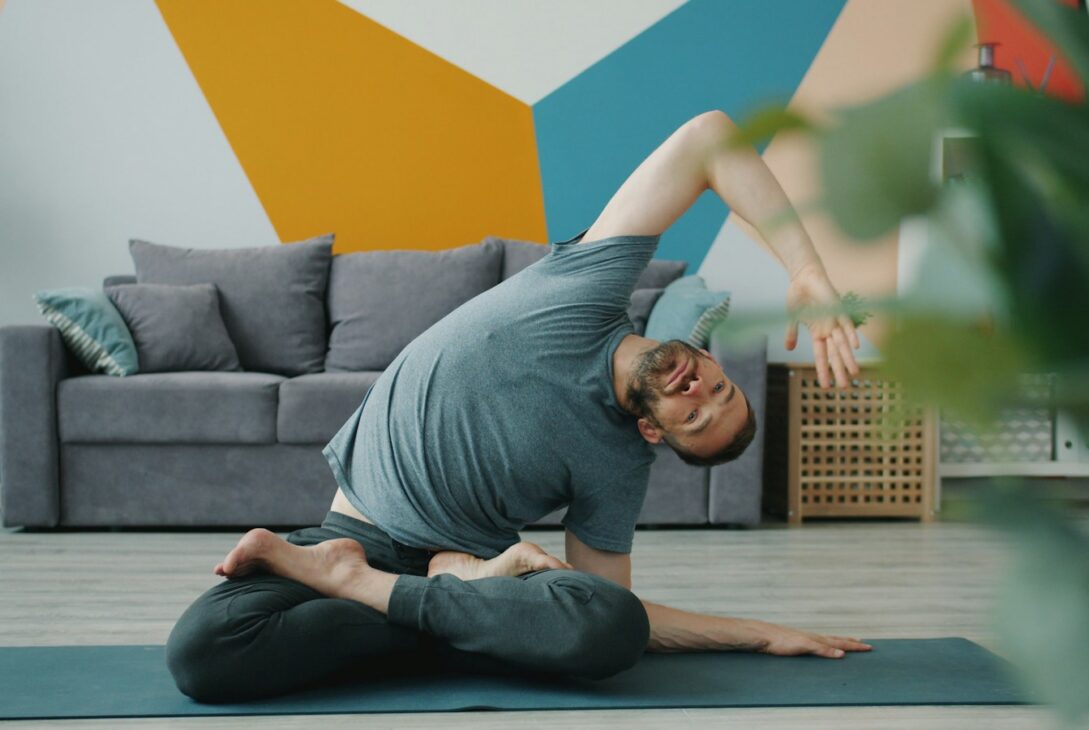
If you spend much of your day sitting, driving or hunched over a screen, you’ve probably noticed that your body doesn’t feel as loose as it used to. Tight hips, stiff shoulders and a sore lower back are common complaints, and a short daily stretching routine is one of the easiest ways to help.
You don’t need to be flexible to start, and you don’t need to spend an hour. Ten minutes a day is enough to make a difference. Here’s how to stretch safely, what the research does and doesn’t say, and a simple routine you can do at home.
What Stretching Can (and Can’t) Do
Regular stretching is well supported for one thing: it improves your range of motion, meaning how far your joints can comfortably move. Many people also find it relieves stiffness, helps them relax and makes everyday movements like bending, reaching and squatting feel easier.
Some claims are less certain. The evidence that stretching prevents injuries is mixed, and it isn’t a cure for back pain or a substitute for strength training. Stretching also won’t make your muscles “longer” in a permanent way. Gains in flexibility seem to come largely from your nervous system becoming more tolerant of the stretch, along with some tissue changes over time.
The best way to think about it: stretching is a useful tool for mobility and comfort, best combined with strength work and regular movement.
Static vs. Dynamic Stretching
- Static stretching means moving into a position and holding it, typically for 20 to 30 seconds or more. It’s best for improving flexibility and works well after exercise or as a separate session.
- Dynamic stretching uses controlled movements, such as leg swings and arm circles, to warm up the body. It’s better before exercise, especially sports and workouts that need power or speed.
Holding long static stretches right before a maximal-effort activity may slightly reduce performance in some cases, so save them for after your workout, or do them on their own.
The Ground Rules
- Warm up first. Stretch after a few minutes of walking or light movement, or after a shower. Stretching cold muscles feels worse and is less effective.
- Stretch to mild tension, not pain. You should feel a gentle pull, never sharp, burning or pinching pain.
- Hold steady. Avoid bouncing, which can trigger the muscle to tighten.
- Breathe. Slow, relaxed breathing helps you ease into the stretch.
- Hold for 20 to 30 seconds and repeat each stretch two to four times. Older adults may benefit from slightly longer holds, such as 30 to 60 seconds.
- Be consistent. Aim for at least two to three days a week. Daily is better.
- Go equally on both sides, though it’s normal if one side is tighter.
A 10-Minute Daily Routine
Do each stretch on both sides where relevant. Move slowly and breathe.
1. Neck side tilt (20 to 30 seconds per side)
Sit or stand tall. Gently tilt your ear toward your shoulder, keeping the opposite shoulder relaxed down. For a deeper stretch, rest your hand lightly on your head without pulling.
2. Shoulder and chest opener (30 seconds)
Clasp your hands behind your back, straighten your arms and gently lift them slightly while opening your chest. If that’s too much, hold a towel between your hands.
3. Cross-body shoulder stretch (20 to 30 seconds per side)
Bring one arm across your chest and use the other hand to gently press it closer. Keep your shoulders relaxed.
4. Cat-cow (10 slow repetitions)
On hands and knees, arch your back and look up as you inhale (cow), then round your back and tuck your chin as you exhale (cat). This mobilizes your spine and relieves stiffness.
5. Child’s pose (30 seconds)
From hands and knees, sit your hips back toward your heels and reach your arms forward along the floor. It stretches the lower back, hips and shoulders. If your knees complain, place a cushion between your thighs and calves.
6. Hip flexor stretch (30 seconds per side)
Kneel on one knee with the other foot in front, using a pad under your knee. Tuck your pelvis slightly and gently shift forward until you feel a stretch at the front of the hip of the kneeling leg. Sitting shortens these muscles, so they’re often tight.
7. Hamstring stretch (30 seconds per side)
Sit on the floor or lie on your back. Extend one leg and gently hinge forward, or loop a towel or strap around your foot and pull the leg up. Keep your back relatively straight and your knee slightly soft.
8. Figure-four glute stretch (30 seconds per side)
Lie on your back with knees bent. Cross one ankle over the opposite knee and gently draw the lower leg toward your chest. You should feel it in the outer hip and buttock.
9. Quad stretch (20 to 30 seconds per side)
Stand holding a wall, bend one knee and hold your ankle behind you, keeping your knees close together. If you can’t reach, loop a towel around your ankle.
10. Calf stretch (30 seconds per side)
Place your hands on a wall, step one foot back and keep that heel on the floor with the leg straight. Lean forward until you feel a stretch in the calf. Bend the back knee slightly to target the lower calf.
11. Lower back rock (30 seconds)
Lie on your back, pull both knees toward your chest and gently rock side to side. It’s a relaxing finisher for tired backs.
Make It a Habit
- Link it to something you already do: stretch after brushing your teeth, while the kettle boils or while watching TV.
- Keep a mat visible or a spot ready.
- Start with five minutes if ten feels like too much, and build up.
- Add micro-stretches during the day. Stand up and reach overhead, roll your shoulders and stretch your neck whenever you’ve been sitting for a while.
- Track it. A simple tick on a calendar can keep you going.
Stretching for Common Problem Spots
- Desk workers: focus on chest, hip flexors, upper back and neck.
- Runners and walkers: calves, hamstrings, quads and hips.
- People with tight lower backs: hips, hamstrings and glutes often play a role, and so does strengthening your core.
- Drivers: hips, lower back and shoulders.
Safety and When to Be Careful
- Skip or modify stretches that cause sharp pain, numbness or tingling.
- If you have a recent injury, a joint condition, osteoporosis, a history of surgery or are pregnant, ask a doctor or physiotherapist which stretches suit you.
- If you’re very flexible, you may need stability and strength work more than extra stretching. Avoid pushing into extreme ranges.
- Don’t force a stretch, and never push through pain.
Beyond Stretching
Flexibility is only part of the picture. For long-term mobility, also include regular walking or other aerobic activity, two or more strength sessions a week and breaks from sitting. Yoga, tai chi and Pilates combine movement, strength and flexibility, and many people enjoy them as an alternative or addition.
Frequently Asked Questions
How long until I see improvement?
Many people notice greater ease within two to four weeks of regular stretching, with continued gains over months.
Should stretching hurt?
No. You should feel a mild to moderate pull, but not pain.
Is it better to stretch in the morning or evening?
Whichever you’ll do consistently. Morning stretching can ease stiffness, and evening stretching can help you wind down.
Do I need to stretch before every workout?
A dynamic warm-up is more useful before exercise. Save longer static stretching for afterward or a separate session.
Conclusion
A steady ten-minute stretching habit won’t transform you overnight, but it can leave you feeling looser, less stiff and more comfortable in everyday movement. Choose three stretches from this list for tonight, hold each gently and breathe. Then build from there.
This article offers general information, not medical advice. If you have pain, an injury or a health condition, consult a doctor or physiotherapist before starting a new stretching routine.