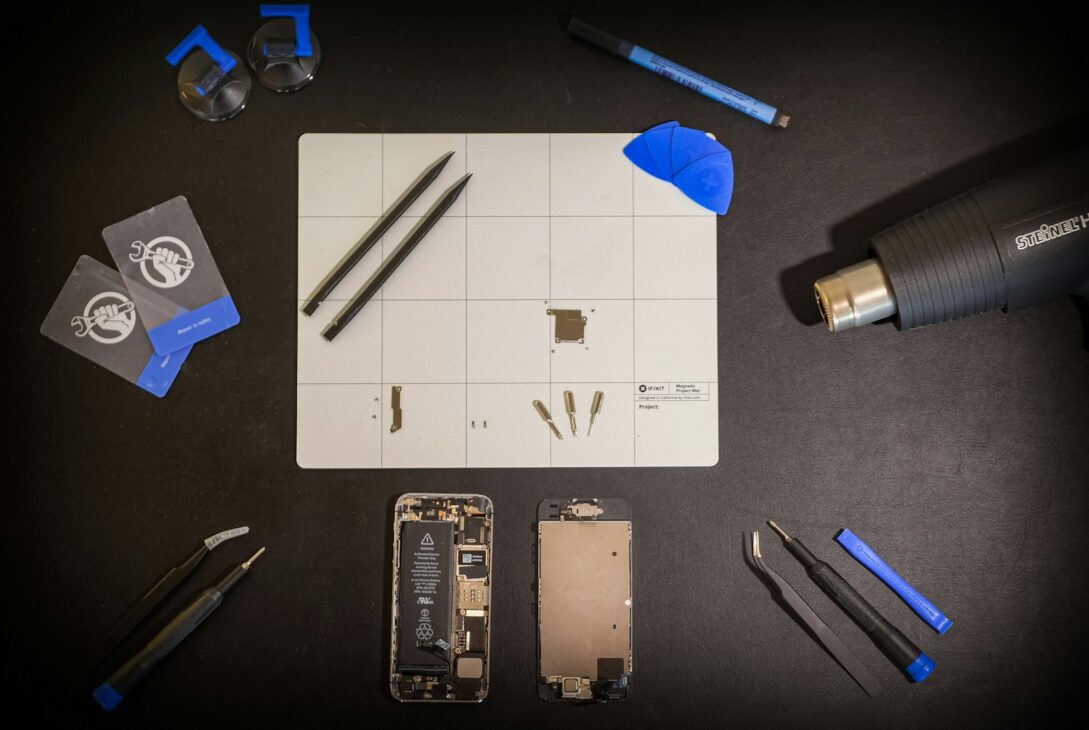
Your phone’s battery dies after two years, and the manufacturer says the only option is a replacement. A washing machine breaks, and the part costs nearly as much as a new one. A tractor or laptop refuses to accept a perfectly good replacement part because the software doesn’t recognize it. These frustrations are what the “right to repair” movement is trying to change.
Laws are now arriving in several parts of the world, and they’re starting to shape how gadgets are designed, sold and fixed. Here’s what that means for you.
What “Right to Repair” Actually Means
The idea is simple: if you buy something, you should be able to get it fixed, by the manufacturer, an independent shop or yourself, without artificial barriers. In practice, right to repair laws usually aim to:
- Make manufacturers supply spare parts, tools and repair information to owners and independent repairers
- Limit design and software tricks that block repairs, such as glued-in components or “parts pairing” that makes a device reject a replacement part
- Require repairs to be offered at reasonable prices, or at all, for certain products
- Support longer product lifespans, which also cuts electronic waste
Why It Matters
Repair affects your wallet and the planet. The European Commission has estimated that replacing products too early costs EU consumers around 12 billion euros a year and adds hundreds of millions of tonnes of greenhouse gas emissions. US consumer advocates make similar arguments, estimating that easier repair could save an average household a few hundred dollars annually. Whatever the exact figure, the logic is clear: a repaired device is cheaper than a new one and keeps materials out of landfill.
What’s Happening in the European Union
The EU adopted its Right to Repair Directive (Directive 2024/1799) in June 2024, and member states had until 31 July 2026 to turn it into national law. Under the rules:
- For covered products, such as washing machines, vacuum cleaners and mobile phones, manufacturers must repair items that are technically repairable, even after the warranty ends, unless repair is more expensive than replacement.
- When a seller must fix a faulty product under the legal guarantee, a customer who chooses repair gets an extra 12 months of cover.
- Manufacturers can’t use contract terms, hardware or software techniques that block repair, including obstacles to using independent repairers or second-hand and 3D-printed parts.
The rollout has been uneven. Germany’s law took effect in late July 2026, but reports in autumn 2026 said many member states missed the deadline, and the European Commission opened infringement proceedings against 18 of them for incomplete notification. Consumer groups also point to limits: the directive covers only certain product categories, and manufacturers can set what counts as a “reasonable” price for spare parts. Protection will depend partly on where in Europe you live.
What’s Happening in the United States
There’s no federal right to repair law for consumer electronics. Instead, states have led. As of mid-2026, more than a dozen states had passed some form of right to repair statute, covering areas such as consumer electronics, agricultural equipment, cars and, more recently, powered wheelchairs. Broad consumer electronics laws exist in states including New York, Minnesota, California, Oregon, Colorado and Washington, each with its own details and start dates. Oregon’s law notably tackles parts pairing.
Rules differ by state, so check what applies where you live.
The Rest of the World
Many countries have no dedicated rules for consumer electronics at all. In some places, such as South Africa, campaigners have been pushing for action while the EU and several US states have moved ahead. If you live somewhere without such laws, you still benefit indirectly. Global manufacturers often adjust designs, parts programs and repair guides across regions to meet the strictest rules.
How It Changes the Gadgets You Buy
Expect gradual changes rather than overnight ones:
- More available parts and manuals for popular phones, laptops and appliances.
- More independent repair options, as shops gain access to genuine parts and diagnostic tools.
- Repairability information at the shop. EU energy labels for phones and tablets sold since 2025 include a repairability grade, and some countries run their own repairability scores.
- Longer software and security update commitments on some devices.
- Design shifts, such as easier-to-swap batteries and modular parts, though progress varies by brand.
How to Buy With Repair in Mind
- Check repairability ratings where available, and read reviews from teardown and repair specialists.
- Look at the parts and service policy. Can you buy batteries, screens and chargers? At what prices?
- Check the software update promise. A device that’s physically repairable but no longer gets security updates isn’t a long-term bet.
- Prefer standard parts and screws over glue and proprietary fasteners.
- Ask about warranty terms and whether third-party repairs affect them under your local law.
Should You Repair It Yourself?
Simple jobs, such as replacing a phone battery with a proper kit, swapping a laptop’s memory or cleaning a fan, are within reach for many people, especially with good guides. Be careful with lithium-ion batteries, which can be a fire risk if punctured or mishandled, and with mains-powered appliances where electrical hazards exist. When in doubt, use a qualified repairer. Back up your data before any repair.
Right to Repair Isn’t a Magic Fix
Critics and supporters agree that the laws have limits. Enforcement takes time, prices for parts can still be high, security and safety concerns are raised by some manufacturers, and many products fall outside the rules. The movement’s supporters say these are solvable problems, and that the direction of travel matters most.
Frequently Asked Questions
Does right to repair void my warranty?
It depends on local law and the manufacturer’s terms. In some places, using an independent repairer doesn’t automatically void a warranty. Check your rights before choosing.
Are repairs always cheaper than replacing?
Not always, but often for batteries, screens and simple parts. For older or cheaper items, replacement may still win.
Does this apply to cars and farm machinery?
Some laws do, and some campaigns focus on them. Rules vary widely by region.
What can I do to support repair?
Choose repairable products, use local repair shops, keep devices longer and check your local rules and campaigns.
Conclusion
Right to repair is changing what it means to own a device: more access to parts, more repair options and a growing push for products built to last. Before your next purchase, look up its repairability rating and parts policy. It’s a two-minute check that can save you real money.