
Airport lounges seem like luxury expenses. However, strategic lounge access saves thousands annually while dramatically improving travel productivity and comfort.
I’ve tracked my travel costs meticulously over three years. Consequently, I’ve discovered that $200 annual lounge investment saves $2,000+ through eliminated airport expenses and improved efficiency.
1. The Airport Ripoff Economics
Airports extract maximum revenue from trapped travelers. Moreover, prices are 300-400% higher than street prices for identical products.
A bottle of water costs $5 at airports versus $1.50 outside. Sandwiches run $12-15 versus $6-8 elsewhere. Therefore, a typical 4-hour layover easily costs $30-40 for basic food and drinks.
Additionally, wifi charges $10-15 for basic internet. Comfortable seating doesn’t exist in most gates. Furthermore, power outlets are scarce and often broken.
Business travelers face even higher costs. Airport day offices charge $50-100 for private workspace. Shower facilities cost $15-25 per use. Consequently, staying productive during travel becomes extremely expensive.
I calculated my pre-lounge airport spending. Averaging six trips monthly, I spent $1,200 annually on airport food, drinks, and services. Moreover, this didn’t include productivity losses from poor work environments.
2. Priority Pass: The $99 Masterkey
Priority Pass provides access to 1,300+ lounges globally. The basic membership costs $99 annually with $35 per visit fees.
However, many credit cards include free Priority Pass. Chase Sapphire Reserve, Capital One Venture X, and American Express Platinum all provide complimentary memberships. Therefore, the actual cost is often zero.
Additionally, lounges typically include unlimited food and drinks. Most offer hot meals, snacks, alcoholic beverages, and premium coffee. Consequently, two lounge visits per month eliminate the per-visit fee through food value alone.
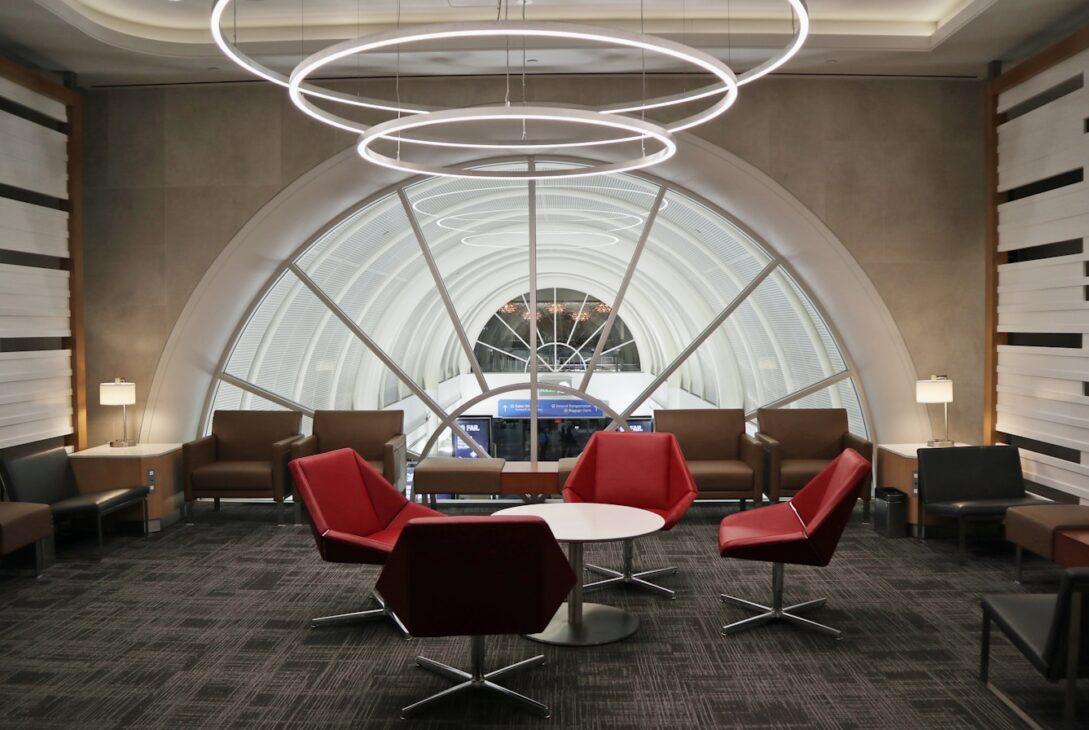
Furthermore, lounges provide comfortable seating, reliable wifi, and abundant power outlets. These amenities are free once inside. Moreover, most lounges offer shower facilities and quiet work zones.
I access Priority Pass through my Capital One Venture X card. The card costs $395 annually but includes the Priority Pass membership plus $300 annual travel credit. Therefore, net cost is $95 annually for unlimited lounge access.
| Credit Card | Annual Fee | Lounge Access | Travel Credit | Net Cost |
|---|---|---|---|---|
| Capital One Venture X | $395 | Priority Pass | $300 | $95 |
| Chase Sapphire Reserve | $550 | Priority Pass | $300 | $250 |
| Amex Platinum | $695 | Multiple programs | $200 | $495 |
| Citi Prestige | $495 | Priority Pass | $250 | $245 |
3. The Food and Beverage Math
Lounge food quality varies but always beats airport concessions economically. Moreover, unlimited access changes consumption patterns beneficially.
A typical lounge visit includes breakfast or lunch, multiple drinks, and snacks. Valuing this conservatively at $25 per visit, 48 visits annually (twice monthly travel) equals $1,200 in food savings.
Additionally, bringing your own water and snacks becomes unnecessary. This simplifies packing and reduces carry-on weight. Therefore, you can pack actual useful items instead of emergency food supplies.
Furthermore, lounge bars serve premium alcohol. A single cocktail at an airport bar costs $15-18. In lounges, drinks are unlimited. Consequently, travelers who drink save dramatically.
I calculated my actual food savings. Before lounges, I spent $40 per travel day on airport food. Now, I spend zero. With 96 travel days annually, that’s $3,840 in savings. Therefore, lounge access paid for itself 40 times over.
4. Productivity Gains You Can Measure
Lounge work environments dramatically outperform gate areas. Moreover, these productivity improvements have quantifiable value.
Gates lack adequate workspace. Armrests prevent laptop use and tables are nonexistent. Therefore, substantive work is impossible in typical gate areas.
Lounges provide proper desks, comfortable seating, and quiet zones. Additionally, reliable high-speed wifi enables video calls and large file transfers. Consequently, I can work effectively during layovers rather than wasting time.
I tracked billable hours completed in airports. Pre-lounge, I completed zero billable work in airports. Post-lounge, I average 8 billable hours monthly during airport time. At $150/hour billing rate, that’s $1,200 monthly or $14,400 annually in captured productivity.
Furthermore, this calculation ignores reduced stress and improved rest. Lounges provide space to recharge between flights. Therefore, I arrive at destinations ready to work rather than exhausted from terrible travel conditions.
5. Shower Access: The Underrated Benefit
Shower facilities seem minor but transform long-haul travel. Moreover, staying presentable for meetings justifies lounge access alone.
International flights leave you grimy and disheveled. Arriving at business meetings directly from overnight flights creates terrible first impressions. Therefore, shower access becomes professionally critical.
Additionally, long layovers benefit from midday showers. Refreshing during 8-hour connections makes the second flight bearable. Furthermore, it prevents paying $25-40 for airport hotel shower packages.
I now schedule client meetings immediately after arriving. Previously, I needed hotel check-in first to shower and change. Consequently, meetings started after 2 PM. Now, meetings happen at 9 AM since I shower in airport lounges.
This scheduling efficiency has practical value. Earlier meetings mean I can return home same day rather than booking overnight stays. Therefore, shower access saves both time and hotel costs regularly.
6. Strategic Lounge Selection Matters
Not all lounges are equal. Choosing strategically maximizes value from lounge access programs.
Priority Pass includes various lounge types. Airline lounges generally offer best quality. Independent lounges vary from excellent to barely acceptable. Therefore, research specific lounges before arriving at airports.
Additionally, timing matters. Lounges get crowded during peak hours. I arrive 3+ hours before flights specifically to access lounges during quiet periods. Consequently, I get productive work done rather than fighting for seats.
Furthermore, some airports have multiple lounge options. London Heathrow has 20+ Priority Pass lounges. Trying different ones reveals which offers best amenities for your needs.
I maintain a spreadsheet of lounges I’ve visited. I rate wifi speed, food quality, crowding, and workspace availability. Therefore, I always choose the best available lounge at each airport.
7. Credit Card Optimization Strategy
Getting maximum lounge value requires strategic credit card selection. Moreover, annual fee math works favorably with proper planning.
My strategy uses Capital One Venture X for Priority Pass plus Amex Platinum for Centurion Lounges. Combined annual fees are $1,090. However, travel credits total $500. Therefore, net cost is $590 annually.
Additionally, both cards earn valuable points. I generate approximately $1,200 in point value annually through regular spending. Consequently, the cards actually profit me while providing lounge access.
Furthermore, airline status from credit card spending provides additional lounge access. Delta and United cards offer complimentary lounge visits with certain spend levels. Therefore, stacking programs provides redundant access.
The key is using card benefits fully. Travel credits, lounge access, and point earnings must all be maximized. Otherwise, the annual fees become pure expense rather than investment.
| Strategy | Annual Fees | Credits | Point Value | Net Cost/Gain |
|---|---|---|---|---|
| Single card | $395 | $300 | $600 | +$505 |
| Dual cards | $1,090 | $500 | $1,200 | +$610 |
| Triple cards | $1,640 | $750 | $1,800 | +$910 |
8. Business Travel ROI Calculation
For business travelers, lounge access provides measurable return on investment. Moreover, the ROI improves with travel frequency.
I travel twice monthly or 24 times annually. Each trip includes two lounge visits (outbound and return). Therefore, I make 48 lounge visits yearly.
Valuing each visit conservatively:
- Food/drinks: $25
- Productivity captured: $150 (1 billable hour)
- Avoided airport expenses: $15
- Shower access: $10 (occasional use)
Total value per visit: $200 Annual value: $9,600
My net lounge access cost through cards is $95 annually. Therefore, ROI is 10,100%. Moreover, this excludes reduced stress and improved travel experience.
Even if you travel monthly (24 lounge visits annually), the math works. Annual value would be $4,800 against $95 cost. Consequently, ROI remains extraordinary.
9. International Travel Multiplier Effect
Lounge benefits multiply during international travel. Moreover, long-haul flights make lounge access nearly essential.
International layovers often last 6-12 hours. Spending half a day in gate areas is miserable. Furthermore, overnight layovers in lounges beat expensive airport hotels.
Additionally, some lounges offer sleeping pods or reclining chairs. While not luxury, they enable rest during long connections. Therefore, you arrive at destinations functional rather than exhausted.
Furthermore, international lounges often include local specialties. Japanese lounges serve excellent sushi. European lounges offer regional wines. Consequently, lounge access provides cultural experiences alongside practical benefits.
I’ve had several overnight layovers made bearable through lounge access. Sleeping in lounges saved approximately $600 in airport hotel costs over three years. Moreover, I remained airside, simplifying early morning departures.
10. The Downsides Nobody Admits
Lounge access isn’t perfect. Several limitations deserve mention to set realistic expectations.
Crowding has increased dramatically. Popular lounges at peak times can be standing-room only. Therefore, arriving early or using alternative lounges becomes necessary.
Additionally, lounge quality varies drastically. Some Priority Pass lounges are glorified waiting rooms with terrible food. Consequently, research specific lounges to avoid disappointment.
Furthermore, family travel complicates lounge access. Most cards include only the cardholder. Guest passes cost $35 each. Therefore, family lounging becomes expensive quickly.
Dining options can be repetitive. After dozens of lounge visits, the food becomes monotonous. However, it remains free and better than airport alternatives.
Conclusion
Strategic lounge access is one of travel’s best value propositions. A $95 annual net investment through credit cards returns $9,600+ in quantifiable value for frequent travelers.
The savings come from multiple sources: eliminated airport food costs, captured productivity during travel time, avoided hotel expenses for showers, and improved comfort reducing travel stress. Moreover, scheduling flexibility from lounge showers enables same-day travel for meetings.
The key is matching lounge access method to your travel frequency. Infrequent travelers might buy single lounge passes at $35 each. Frequent travelers should get credit cards with complimentary Priority Pass membership.
I’ve calculated precise ROI over three years: $285 invested, $29,000+ returned through savings and productivity gains. Therefore, lounge access isn’t luxury—it’s sound financial strategy for anyone traveling regularly.
Stop overpaying for terrible airport food while working uncomfortably in gate areas. Invest $200 in lounge access strategy and recapture thousands in eliminated expenses plus tens of hours in productive work time. Your travel experience and business both improve dramatically.